Table Of Content

"Easy to use," "minimal instructions needed" and "works really well for touch-ups" are some of the top comments coming from reviewers about Sensica's hand-held device. Your budget is another consideration, but you may not want to be too frugal or else you’ll miss out on important features. Also, apply sunscreen to the treatment area before going outdoors.
Request Appointment Today
Avoid direct sunlight, tanning beds, sun lamps, or any kind of indoor tanning equipment. The technician may give you ice packs, anti-inflammatory creams or lotions, or cold water to ease any discomfort. Lasers can selectively target dark, coarse hairs while leaving the surrounding skin undamaged. This is normal, and is the hair burning away from the laser’s heat.
Laser Treatments For Dark Skin: Guide For Black Women - Refinery29
Laser Treatments For Dark Skin: Guide For Black Women.
Posted: Tue, 06 Aug 2019 07:00:00 GMT [source]
More on Healthy Beauty
After all your treatments, you may not have new hair growth for several months or years. Thankfully, YAG laser hair removal is here to help solve that dilemma—and it's becoming an increasingly popular solution. We spoke with board-certified dermatologists DiAnne Davis, MD, and Marisa Garshick, MD, to learn more about this dark-skin-friendly method of hair removal. "Avoid waxing, avoid plucking, avoid electrolysis to the area [being treated] for at least three or four weeks" prior to your sessions, adds Dr. Charles. But if you're adamant about removing hair in between sessions, "shaving is the best thing to do," he says. And if you're pregnant, it's also advised that you hold off on treatment, as studies haven't evaluated the safety of laser hair removal during pregnancy.
How long the treatment keeps hair at bay varies.
It’s also important to trim some of the hair in the treatment area to make the procedure smoother. Don’t hesitate to ask us anything you need to know about laser hair removal. Like most treatments at Ethos Spa, our laser hair removal treatments also start with a consultation. During this time, we examine your skin and check your medical history to find out if you’re qualified for the treatment.
How we test the best at-home laser hair removal devices
Laser therapy procedures are not one size fits all and the wrong treatment can cause lasting damage. So, how can you tell which laser treatments are right for darker skin tones? Here, we caught up with top dermatologists and an aesthetic nurse to find out why skin tone affects the outcome of certain laser procedures and the best skin refining and hair removal laser options for those with darker complexions.
What's the difference between professional and at-home laser hair removal devices?
Thankfully, technology has made some improvements, and now there are laser hair removal options for dark skin that have less risk of damaging the skin. We spoke with the experts to ask the important questions—what laser is best for dark skin, what you need to do to prepare, and how to know if this treatment is right for you. The risk of scarring is slim with laser hair removal, as long as you have an experienced technician like our providers at Ethos Spa. We have already performed this kind of treatment for hundreds of patients before, so you can trust us to proceed with extra care and caution. No, a laser can’t cause more hair to grow in the treated areas.
Allure Daily Beauty Blast
“I’m pretty sure I audibly let out a scream or squeal.” And that’s normal according to Dr. Hartman. “It’s not going to feel good because for the most part, no laser ever feels all that great,” he says. “Some of the newer ones claim that they’re painless, but I don’t know if I believe that because if it has no discomfort, I would question the efficacy. The laser hair removal sensation feels like a hot rubber band, but it’s fleeting.” And if your pain is lingering afterward, then that’s a sign that there’s something wrong. “For irritation or redness, hydrocortisone can help to resolve the inflammation,” says Gmyrek. “For an acne-like eruption, or folliculitis, use topical antibiotics.” For any hyperpigmentation, try a topical cream for dark spots, which your derm can prescribe.
The best laser for dark complexions
Plus, they're considered cosmetic devices, not medical, which means they aren't held to the same standards as professional tools. If you are planning to undergo laser hair removal, you should limit plucking, waxing, and electrolysis for 6 weeks before treatment. That's because the laser targets the hairs' roots, which are temporarily removed by waxing or plucking. If you're not happy with shaving, tweezing, or waxing to remove unwanted hair, laser hair removal may be an option worth considering. Lasers that can be used at home for hair removal are available. But there are no large studies comparing how effective these devices are compared with laser hair removal done at a doctor's office.
Laser hair removal works by targeting a specific medium, such as melanin, pigment, or a hair follicle, he explains. "In the case of doing laser hair removal, primarily the type that we do in darker skin, the laser goes after melanin or pigment at the bulb of the hair." Because many old-school lasers had trouble differentiating between dark skin and dark hair, they carried risks for dark-skinned patients, like hyperpigmentation, blisters, and scarring. These days, though, lasers are much smarter and more precise, so they can get rid of unwanted hair for a wider range of skin tones. "IPL devices don’t work on all skin tones," says Dr. Nazarian.
The doctor might apply a topical anesthetic to your skin to reduce any discomfort during treatment. A dermatologist is a medical doctor who specializes in treating the skin, hair, and nails. Before purchasing any sessions, I highly recommend setting up an appointment to spot test the areas you want to get laser on. First, you'll be able to get a feel for the practice and whether or not you like it and your provider, and most importantly, you'll be able to find out if you'll have any adverse effects to the treatment.
Most at-home hair removal devices on the market are ineffective on darker skin tones, but the Illuminage Touch is an FDA-cleared system, using both IPL and radio frequency energies, that claims otherwise. Laser hair removal is an effective way to get rid of the pesky, unwanted hair that grows in different parts of your face and body. It works by sending a specific wavelength of a laser beam to the treatment area. This targets the melanin that gives the skin its dark color, resulting in thermal injury that destroys the hair follicle or delays the growth of the hair shaft. Burns, permanent changes to your skin color, and scars can occur.
Especially since other hair removal solutions are way pricier than the $200 for the device. In my honest Nood review I tried the device for 90 days to see if it’s actually worth it, and if it actually works against hair growth. Before the treatment session, we apply a numbing cream to the treatment area to protect your skin and minimize discomfort during the treatment. The laser device is then activated to pass through your skin, heat the hair bulb, and inhibit hair growth in the area. High-heat lasers or intense pulsed lights (IPLs) dissolve hair and temporarily disable hair follicles. That way, the follicles won’t be able to produce new hairs for up to several weeks.
If you’re concerned about at-home hair removal, it’s best to first talk with a dermatologist. When used correctly, at-home IPL devices can be safe and effective. At-home devices are created with a lower strength than the devices used in doctor’s offices. But you don’t want to overuse the device, which can lead to skin irritation and hyperpigmentation.
At Ethos, we’ll be glad to assist you in determining the right treatment plan for your aesthetic & wellness needs. Visit an Ethos Aesthetics & Wellness clinic nearest you or contact us today to know what service best fits your concerns. Birnur (she/her) led the Beauty, Health and Sustainability Lab at the Good Housekeeping Institute from 2007 to 2023.
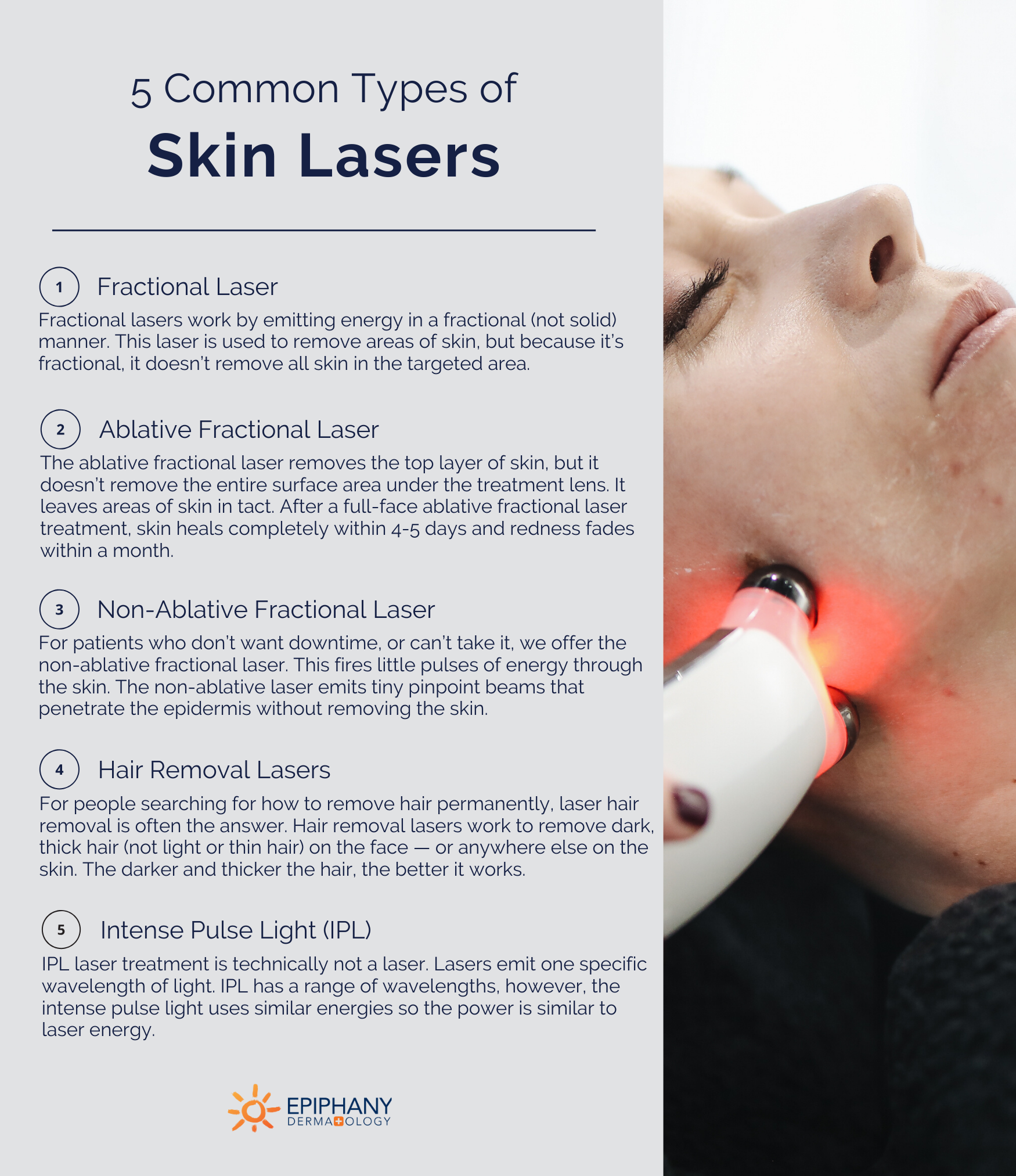
That’s why Akhavan says pico lasers, like PicoSure Focus, are his go-to when working with Asian, East Asian, and Indian patients. Fractionated lasers, like Fraxel, are also an option on all skin tones. They trigger inflammation in little spots throughout the skin, rather than evenly covering the entire surface area. You’re still hitting the skin with heat and energy, though, so there is a risk of skin darkening after the fact. Dermatologists like Zeichner now prescribe hydroquinone, which relaxes pigment-making cells, for a week before and after a fractionated-laser procedure so it won’t trigger pigment production. (This short course of hydroquinone won’t lighten your skin in the long term.) Rahman recommends 4 percent prescription hydroquinone to even out the skin tone.